


Tree surgery done properly,
from a team that's been
doing it for 20 years.
Every job carried out to BS3998:2010 by NPTC qualified, fully insured tree surgeons.
Our services
Tree Felling
Straight, sectional and crane-assisted felling, plus coppicing
Forestry
Thinning, coppicing, woodland management
Crown Work
Reduction, thinning, raising, dead-wooding and pollarding
Hedge Work
Formal and informal hedge trimming, planting and maintenance
Site Clearance
Pre-construction, enabling works, boundary and overgrown garden clearance
A full range of tree work and services.
Whatever condition your trees are in, we can help. Our tree surgeons handle everything from routine maintenance pruning through to full removals, always with safety and the long-term health of the tree in mind.
Tree Felling
Felling isn't always the first option we reach for. Wherever a tree can be safely retained through reduction or crown work instead, we'll say so, removal is always a last resort, not a default. When felling genuinely is the right call, whether that's a dying tree, storm damage, or a species causing structural issues nearby, we carry it out to the standards set out in the AFAG safety guides and BS3998:2010, with a full site assessment and exclusion zone before any cutting starts.
We also respond to storm and emergency work: trees that have come down or been destabilised in bad weather, where safety can't wait for a scheduled visit.
Permissions and protected trees
Before any felling work we check whether a tree is covered by a Tree Preservation Order or sits within a Conservation Area. We can advise on and where needed handle the necessary permissions with the local authority on your behalf.
Clearing up afterwards
Once a tree work is done we deal with the arisings as we work rather than leaving you to sort it out. Timber can be left stacked for firewood if you'd like to keep it, and everything else is chipped using our own equipment and recycled into wood chip for biomass which then get sent to power stations to produce eletric energy for the country.
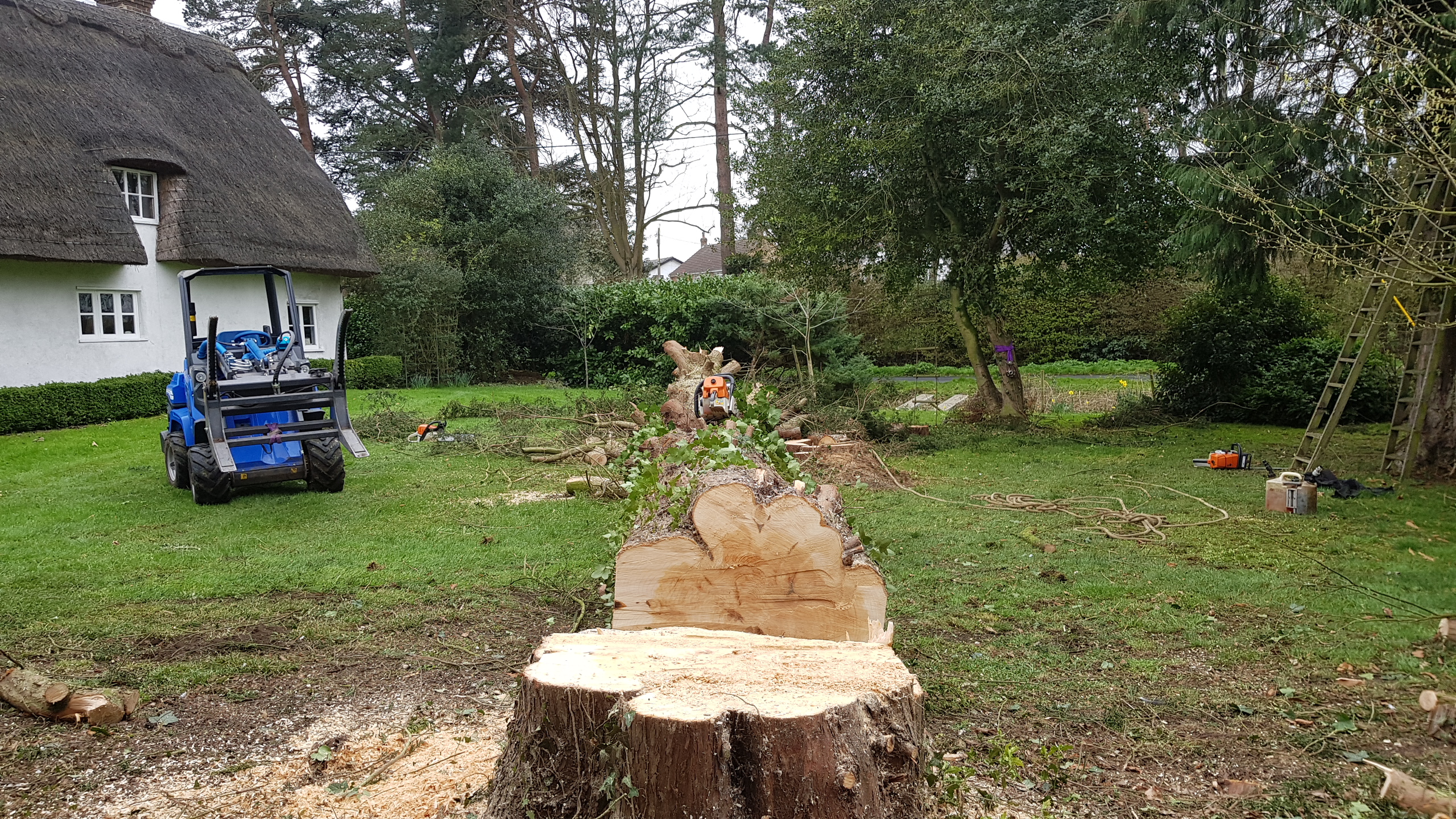
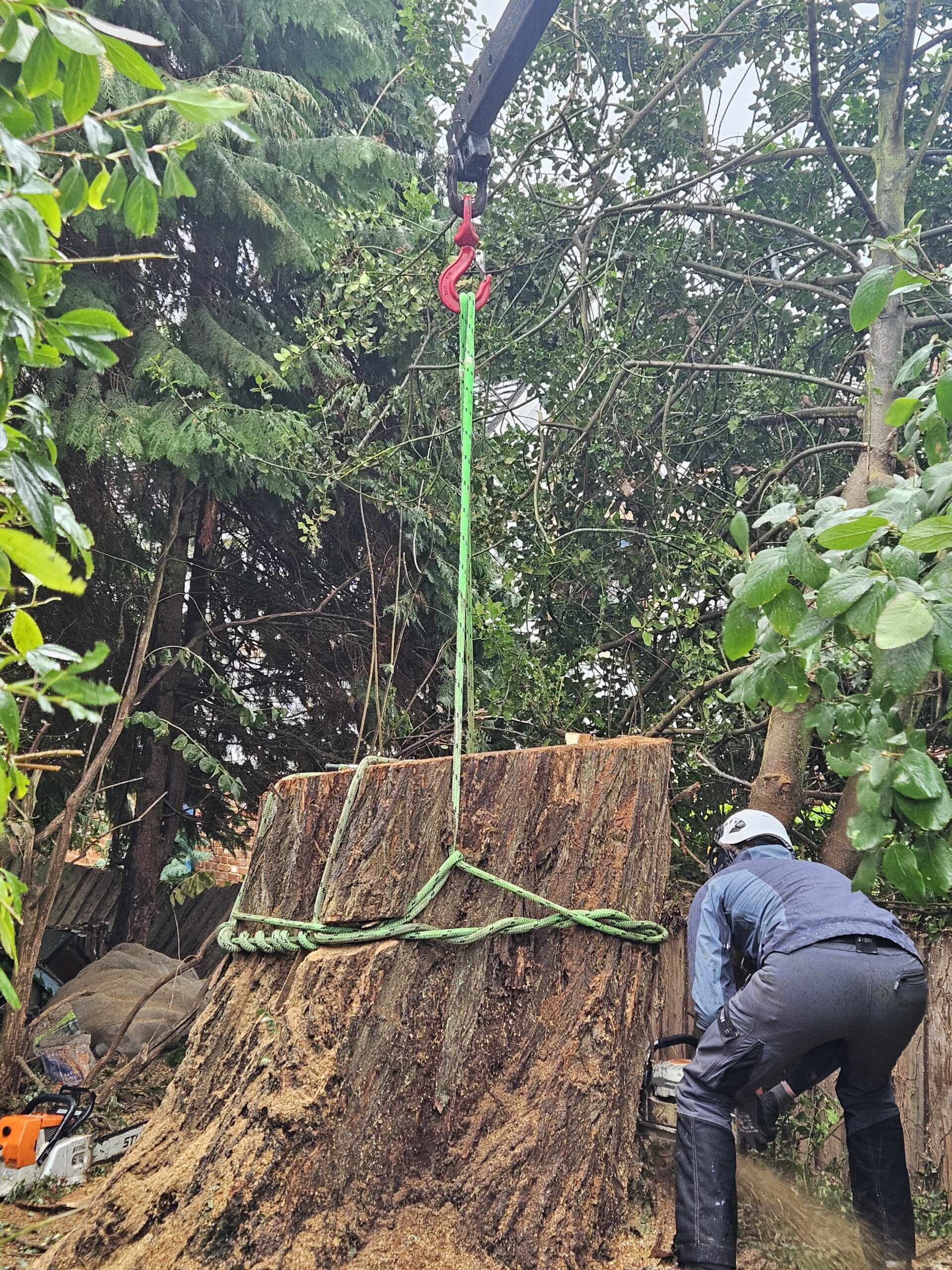
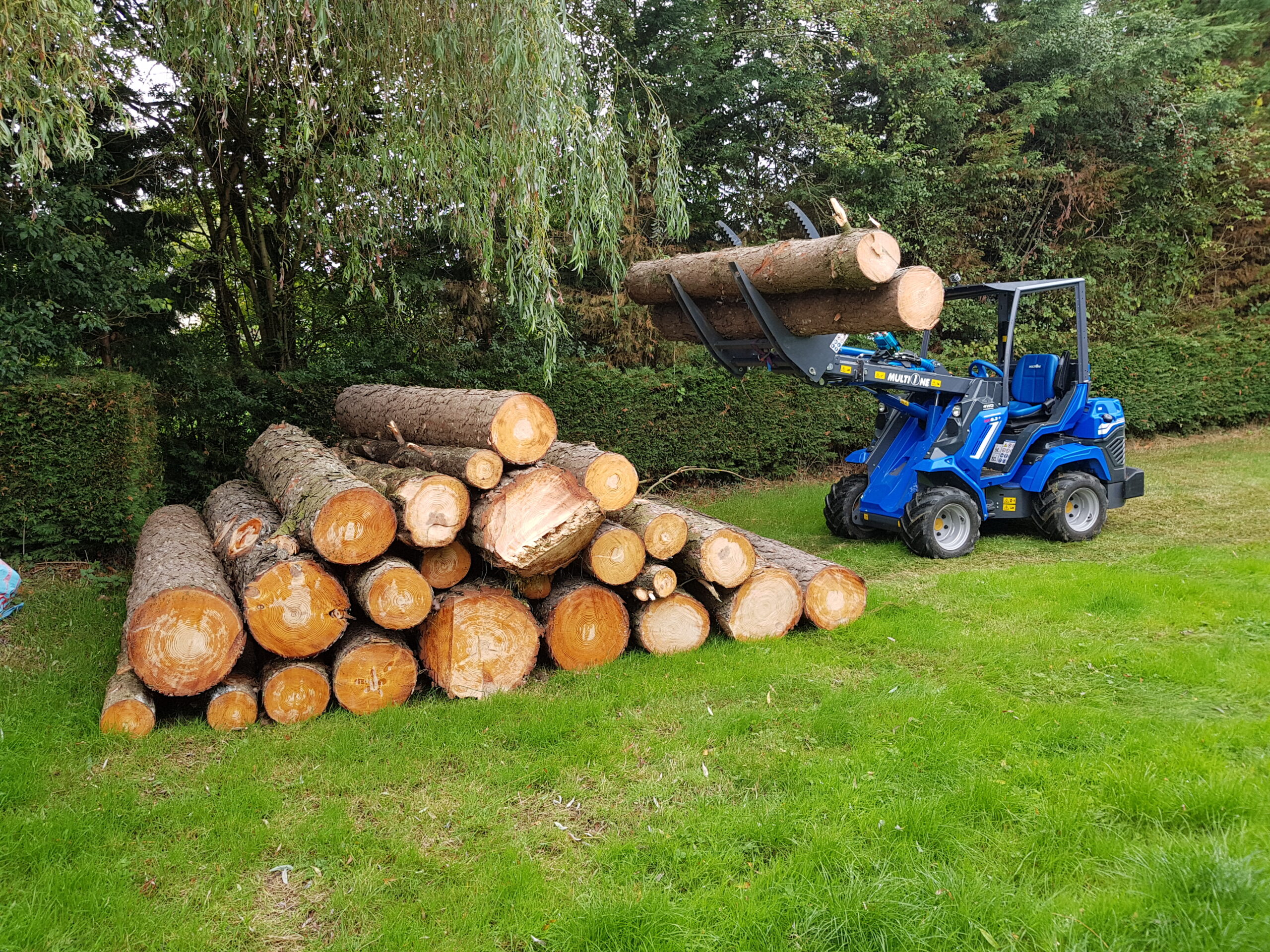
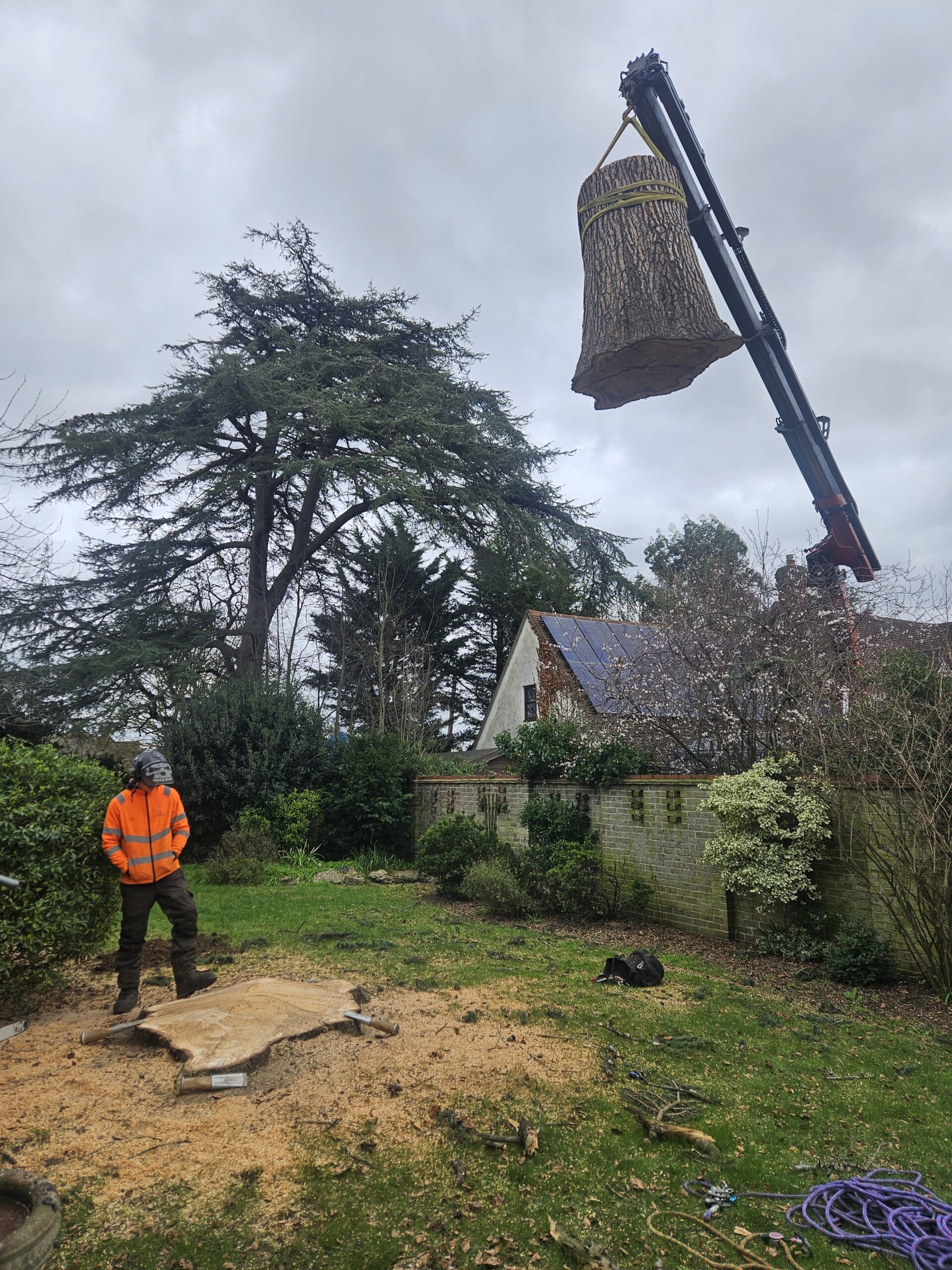
Straight felling
Where there is enough space, felling a tree whole from the base is the quickest and most cost-effective option. We use proven cutting techniques to control exactly where and how the tree falls.
Sectional felling
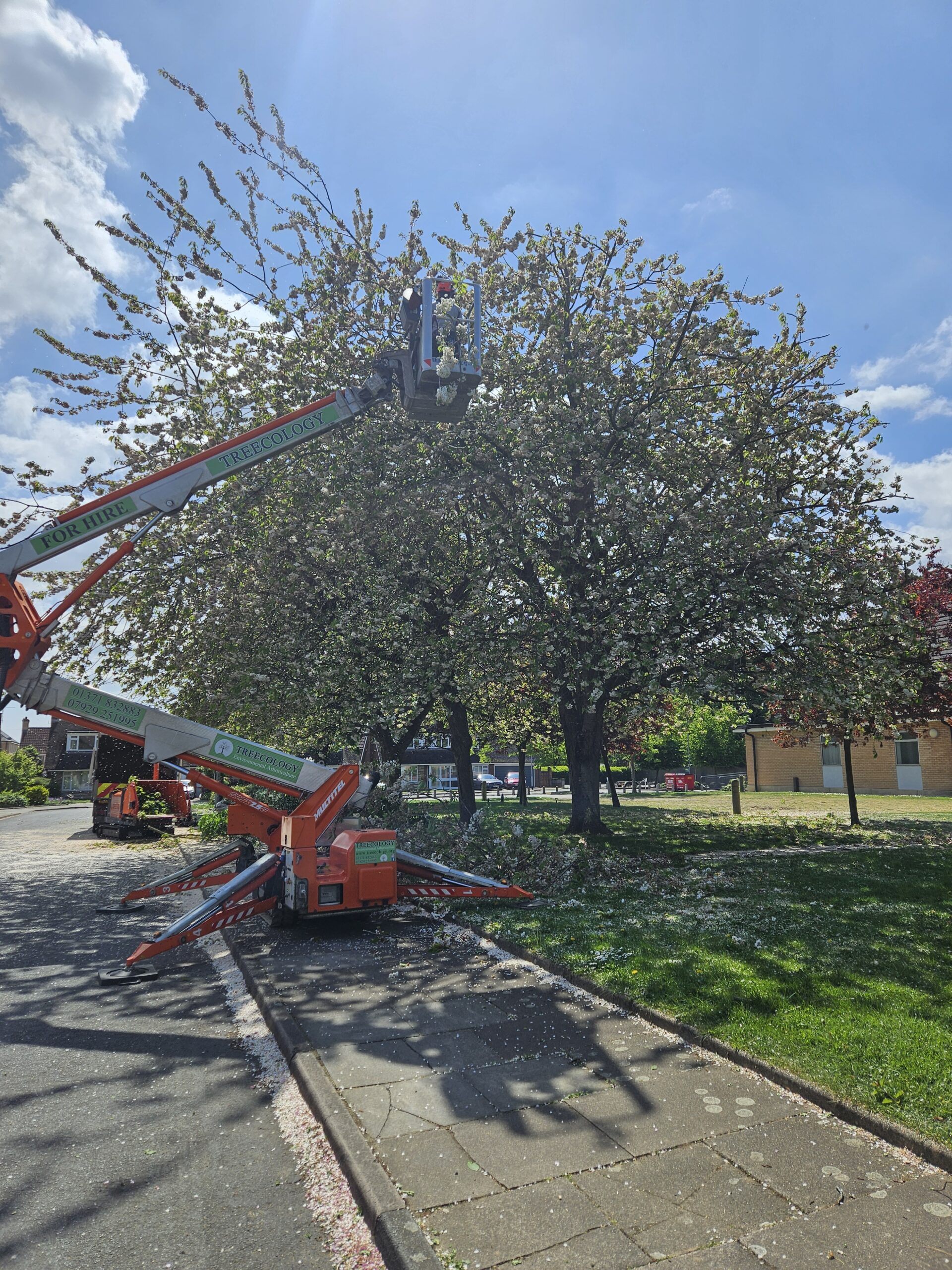
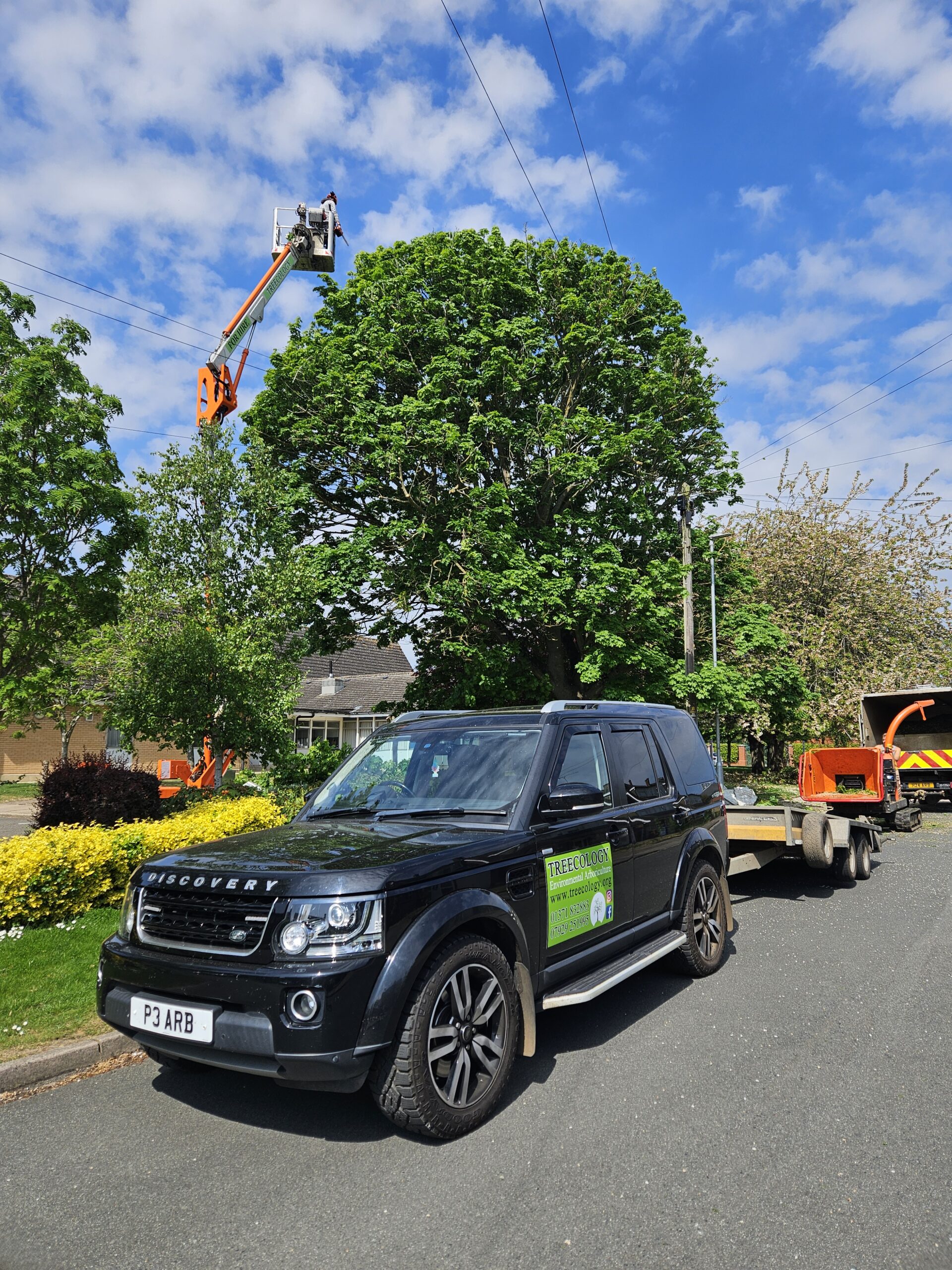
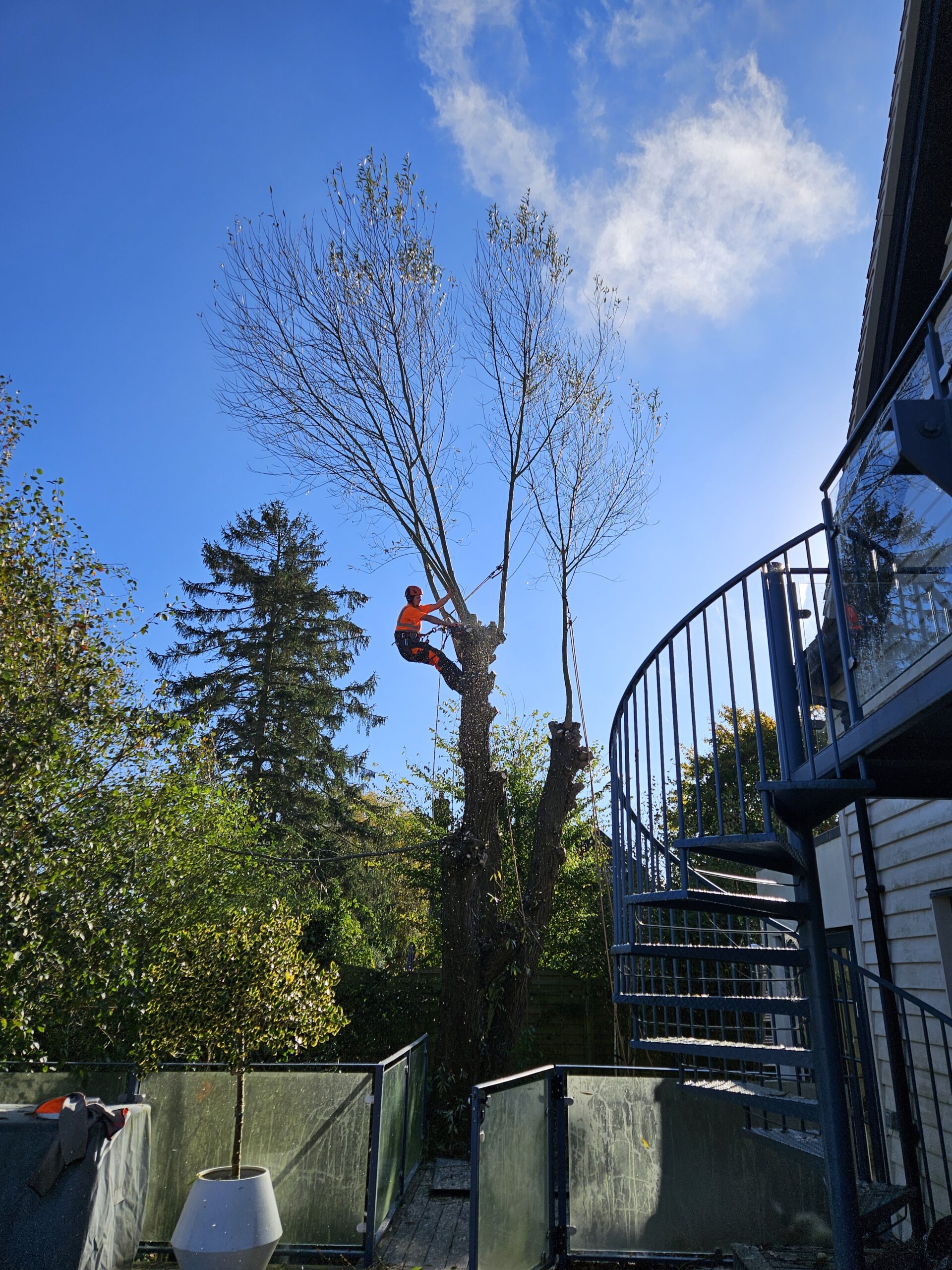
Used where a tree is close to a building, boundary or other obstruction. Our climbers take the tree down piece by piece or using our MEWP where access allows, lowering each section with rigging where necessary to avoid any damage to what is below.
Coppicing
Cutting trees, hedges and shrubs back near ground level to encourage strong, sustainable regrowth, useful for both woodland management and long-term hedge health.
Crown Reducing
Crown reducing is about working with a tree, not against it. Less is more with most species, and it's something many people don't fully appreciate: the more you cut a tree, the more vigorously it can grow back. Our starting point is always balanced between what the client wants and what the tree actually needs.
The right technique depends on the tree's species, age, condition and what you're trying to achieve, whether that's reducing shade, easing pressure on a boundary, or simply keeping a tree healthy for the long term. Where a mature or veteran tree's condition is in question, we can also call on diagnostic testing, sonic tomography and resistance drilling, to see what's happening inside the trunk before recommending a course of action, rather than guessing from the outside.
Getting the timing right
Some trees require pruning at specific times of the year. We'll advise on the right timing as part of your quote, to give the tree the best possible chance for the future.
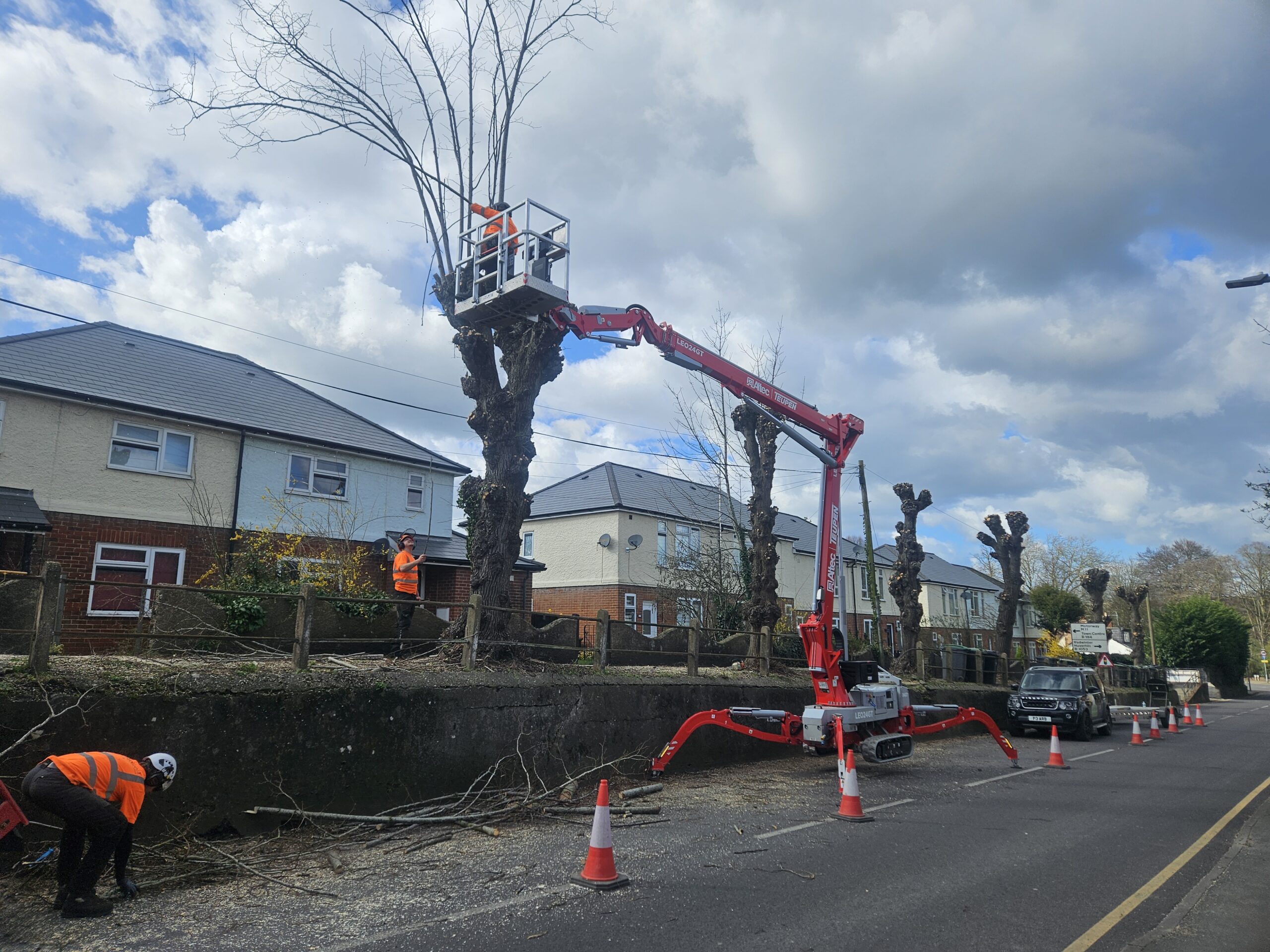
Crown reduction
Reduces the overall height and spread of a tree while keeping its natural shape. Cuts all maid to growing points to enable the tree to regenerate properly.
Crown thinning
Removes a proportion of the inner branches to let more light and air through the canopy, and takes out crossing or rubbing branches before they damage the bark.
Crown raising
Lifts the lower branches to improve clearance for pedestrians, vehicles or a view, without compromising the tree's stability.
Dead-wooding
Removes dead wood from within the crown, particularly important where deadwood sits above a path, driveway or garden that is regularly used.
Deadwood is also a valuable wildlife habitat, so where it isn't posing a safety risk, we'll often recommend leaving it in place rather than removing it purely for tidiness.
Pollarding
Cuts limbs back to old growth points to keep a large tree at a manageable size long-term. Not every species tolerates this well, so we will always advise honestly on whether it is the right approach for your tree.
Safety first, on every job
Every climber works to industry-standard rigging and rescue procedures, and every job starts with a dynamic risk assessment covering hazards such as overhead cables, nearby structures, public access and the weather on the day, all before any cutting begins.
Not sure what you need?
Send us a photo of the tree or hedge in question and we will point you towards the right service, and give you an honest view on whether the work is actually necessary.